Grape Agate: The Fascinating Botryoidal Chalcedony from Indonesia
Undated 26/8/2026
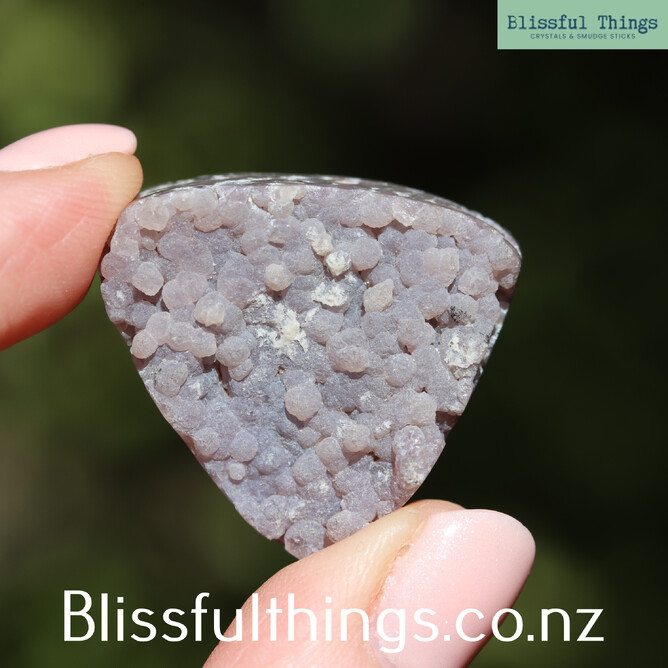
Grape Agate is a fascinating natural mineral from Indonesia, famous for its clusters of tiny, rounded crystals resembling bunches of grapes. Its unusual formation and beautiful shades of purple, lavender and occasionally green have made it popular with mineral collectors and crystal lovers.
But here's something many people don't realise – despite its name, Grape Agate isn't technically an agate.
What Is Grape Agate?
Grape Agate is the popular trade name given to botryoidal chalcedony, a form of microcrystalline quartz composed primarily of silicon dioxide (SiO₂).
The word botryoidal describes a mineral surface made up of rounded, bubble-like formations that resemble a bunch of grapes. This naturally occurring growth habit is responsible for Grape Agate's distinctive appearance.
Grape Agate is particularly well known from Indonesia, where beautiful purple and lavender formations range from tiny rounded clusters to larger mineral specimens.
Why Is Grape Agate So Unique?
It's all about those grapes!
Each rounded formation develops naturally, creating specimens that can look almost too perfect to be real. Colours can range from pale lilac and lavender through to rich purple, with some specimens displaying green or mixed colouring.
Not every piece consists entirely of perfect grape-like spheres. Grape Agate can occur alongside more solid chalcedony material and matrix, creating a huge variety of natural formations.
This means no two specimens are exactly alike – part of the fun is finding the piece that catches your eye.
Is Grape Agate Really an Agate?
Despite its popular name, Grape Agate isn't technically an agate. It is more accurately described as botryoidal chalcedony.
Both agate and chalcedony belong to the quartz family and are primarily composed of silicon dioxide, which helps explain why the trade name “Grape Agate” has stuck.
For collectors, Botryoidal Chalcedony is the more scientifically useful description, while Grape Agate remains the name most people recognise.
Raw and Polished Grape Agate
Grape Agate isn't limited to raw clusters. For the material to be worked and polished into tumbles, cabochons, spheres, towers and other shapes, there needs to be enough solid chalcedony present to provide a more stable structure.
The delicate botryoidal “grape” formations themselves require care when cutting and polishing, as they can break or loosen. Worked pieces can reveal beautiful colours and patterns within the solid chalcedony, while some still retain visible grape-like formations.
At Blissful Things, we stock both natural specimens and worked Grape Agate pieces, giving collectors the opportunity to appreciate this fascinating mineral in different forms.
Metaphysical Properties of Grape Agate
For those who enjoy the metaphysical side of crystals, Grape Agate is associated with calm, intuition, emotional balance and spiritual awareness.
It is believed to encourage mental clarity and peaceful energy, making it a popular crystal for meditation and relaxation.
Some people also associate Grape Agate with dreams and intuition and choose to keep a piece near their bed or meditation space.
Caring for Grape Agate
Chalcedony has a Mohs hardness of approximately 6.5–7, but that doesn't mean a Grape Agate cluster can't be fragile.
The individual rounded formations and delicate crystal areas can be damaged or loosened by knocks and drops. Natural specimens should therefore be handled gently and displayed somewhere secure.
Worked and polished pieces are generally more robust because of the solid chalcedony present, although they should still be treated with care.
A Fascinating Mineral to Collect
Whether you're interested in its geology, metaphysical associations or simply its incredible grape-like appearance, Grape Agate / Botryoidal Chalcedony is a wonderful example of the unusual formations nature can create.
From natural grape-like clusters to polished tumbles, cabochons and statement pieces, each has its own character and beauty.
At Blissful Things, we have a range of individual Grape Agate pieces available, allowing you to choose the exact piece that catches your eye.

