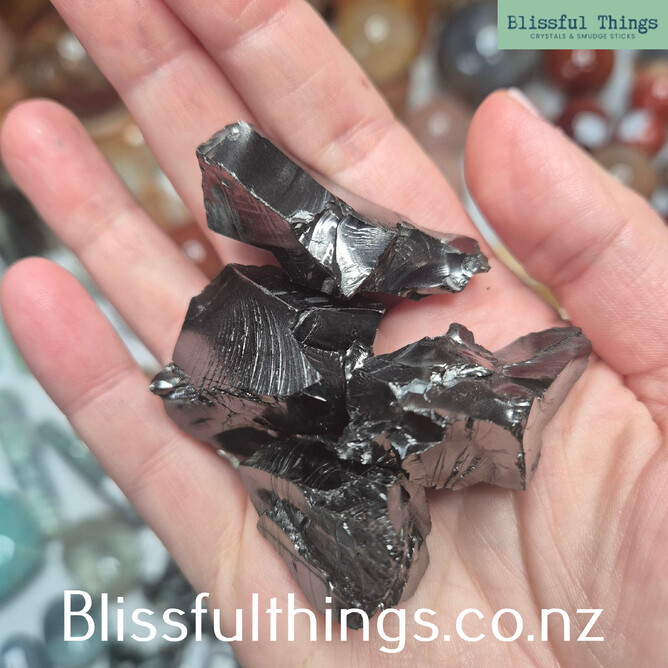
Shungite Elite! The More you Know the Less You Know?
WOW — Two Posts About This Little Controversial Rock Already in one day!
At least I'm getting it out there ;-).
One thing I really pride myself on is this: if I don’t know something, I’ll find out.
After being around crystals most of my life, I’ve learned something important — the more you know, the more you realise you don’t know! The crystal industry is full of twists, turns, and forever-changing supply chains. It’s a machine with many moving parts, and even the most experienced people are still learning something new all the time.
I also buy from both local and international suppliers, and to be honest, most of the main NZ suppliers are fantastic — not shonky at all, and always happy to share their knowledge. That means I can pass what I learn straight on to you. (The international Suppliers, well, that's another beast. I'm grateful for having a good teacher)
Add in a dash of mineral knowledge, a good dose of metaphysical understanding, a sprinkle of business sense, and my naturally curious “rock brain”… and here we are again — talking about Shungite.
The Stone That Took Over the Internet
Shungite — the black, matte, carbon-rich stone that’s been all over the internet for the last 20 years.
To be completely honest, it’s taken me a bit of time to get my head around this one. I’m not a trend follower and I’ve always had a healthy dose of scepticism. But I’ve grown a quiet respect for it.
The feedback from people has been fascinating. While I personally don’t like blaming EMF for everything under the sun, some people genuinely feel better having Shungite nearby. And honestly — who am I to say they don’t? Everyone’s sensitivity and experience are different.
As long as you’ve ruled out the basics — medical, environmental, lifestyle, and (dare I say it) menopause — then there’s nothing wrong with having a little ally like Shungite in your space.
I’m not going to dive into the metaphysical side here — that’s been done to death online, and I’ve already written another blog called Is Shungite Safe to Drink? if you’d like to read more about the practical side of things.
A Little Story: The More You Know, the Less You Know
Recently, I received some feedback. The customer had purchased Elite Shungite and mentioned that while they liked it, they felt it was a bit expensive. And some other info that you will get the gist of as you keep reading but will not include so this blog is not to long.
I did what any curious seller would do — a quick recon mission through other NZ websites — and to be fair, my pricing was right on point. But her comment still got me thinking.
Then I noticed something interesting: her message questioned the Shungite, but her facts seemed a bit AI-generated when discussing the product. And yes, I use AI myself (mainly to help with spelling including this blog — I’m dyslexic and very grateful for the tech!) — but I always make sure what I write stays authentically me.
AI tools can be handy, but they often pull from what’s most popular online, not necessarily what’s most accurate. So, being the curious person I am, I decided to go straight to the horse’s mouth — my supplier.
My Email to the Supplier
I wrote asking for clarification, saying: (these were questions I had, knowing my knowledge)
“Because I’d like to write a blog post to clarify this for my customers, could you please confirm or correct these points?”
Market & Pricing – Colombian material seems newer and often costs more due to smaller deposits and higher export costs, while Russia has larger, more established operations.
Carbon Content – Both Russian and Colombian elite Shungite vary naturally in carbon content, so direct comparisons are tricky.
Authenticity – Some claim Colombian Shungite is just heated coal. Has that actually been confirmed by any geologists or mineralogists?
My Supplier’s Response
They were wonderful — open, honest, and full of insight. Here’s the gist:
Russian suppliers have published a lot online about Colombian Shungite, but a new source isn’t great for their business, especially with tariffs and sanctions. The Colombian material originally sold for twice its current price and is now very well-priced. Russian Shungite has gone up — my supplier’s buy price is now four times higher than what they sell Colombian for! (Kristy butting in here: as of September 2025 remember the gem markets are forever changing)
As for the science side, yes, some geologists debate it — but it’s mostly the usual crowd, who love a good argument. The Colombian material still tests at around 96–98% carbon.
They’ve even seen photos/Videos of the mine, so unless someone is heating an entire mountain, it’s definitely not “baked coal.”
Their final comment made me smile — “The simple test for any Shungite is to use it as a stylus on your phone. Shungite is conductive, so it’ll work with touch screens.”
I also checked that they didn’t mind me sharing this info, and they were totally fine with it! Plus a good little bit of info to share with other crystal sellers. Collaboration over competition every time.
So, What Did I Learn?
This experience reminded me why I love what I do. The crystal world is full of mystery, conversation, and constant learning.
I might not have all the answers, but I’ll always do my best to find the facts, ask questions, and keep an open mind. Because one thing’s for sure — in the crystal business, the more you know, the more you realise there’s still so much to learn.
PS Thanks to my late father for passing his down-to-earth approach to Rocks, Gems, and all that's interesting. xox

